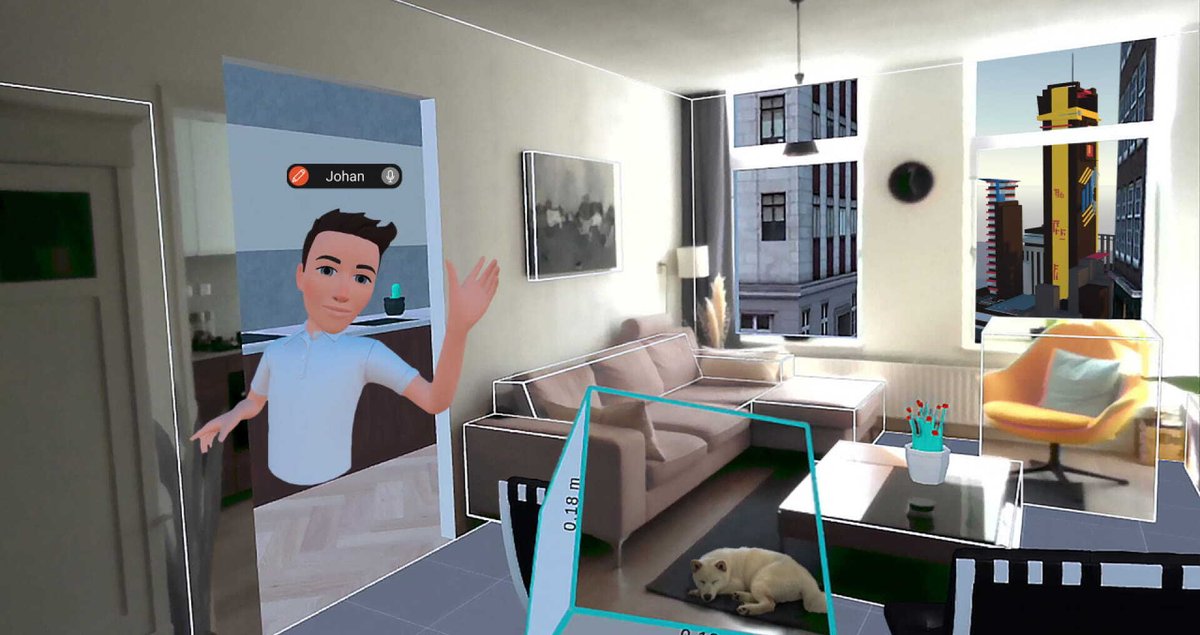
Imagine a world where digital information seamlessly blends with your physical environment—not as an intrusive overlay, but as a natural extension of your perception. This is the promise of Mixed Reality (MR), a technology poised to redefine how we work, learn, and interact. But the true measure of its success won't just be stunning visuals or innovative features; it will be in the profound sense of comfort, design, and Mixed Reality capabilities that empower users without ever making them feel overwhelmed or uneasy.
Designing for Mixed Reality isn't just about placing holograms in space; it's about crafting an experience that respects human psychology, personal space, and physical well-being. It’s a delicate dance between the real and the virtual, and getting it right is the key to unlocking MR's immense potential.
At a Glance: Designing for Human-Centric Mixed Reality
- Prioritize Personal Space: Digital objects should enhance, not invade, a user's comfort zone.
- Anchor to Reality: Integrate virtual elements with physical surfaces for stability and clarity.
- Embrace Subtlety: Use transparency and gentle fades to keep the real world visible.
- Empower User Control: Offer custom settings for UI placement, size, and interaction.
- Foster Natural Interaction: Gaze, voice, and intuitive gestures reduce cognitive load and discomfort.
- Leverage AI: Adaptive UIs and threat-aware design can dynamically maintain comfort.
- Learn from Successes: Healthcare, retail, and education already demonstrate effective, comfortable MR.
Beyond the Pixels: Why Comfort Matters So Deeply in MR
Unlike a flat screen, Mixed Reality doesn't just show you content; it integrates that content directly into your physical space. You're not looking at a screen; you're looking through it, perceiving digital overlays as part of your real environment. This blending is powerful, but it introduces a unique set of challenges related to human comfort.
Think about it: in your daily life, you naturally maintain a personal bubble. Someone standing too close can make you feel uneasy. Now, imagine a virtual object—a hologram of a medical record, a design schematic, or even a virtual character—appearing too near your face. It can trigger feelings of uneasiness, disorientation, or even compromise your physical safety if it obstructs your view of a real obstacle. Preserving this personal space is absolutely essential for broad adoption and user well-being, whether you're in a UK hospital, a collaborative workspace, or an immersive classroom.
The goal isn't just to avoid physical discomfort like eye strain or motion sickness. It's equally about mental comfort—ensuring the user feels in control, safe, and truly present, rather than disoriented or anxious. When MR experiences are designed with this human-first philosophy, they move beyond novelty to become genuinely useful and enjoyable tools.
The Blueprint for Bliss: Core Design Principles for Comfortable MR Interfaces
Crafting a comfortable Mixed Reality experience isn't an accident; it's the result of intentional design choices. These principles are your roadmap to creating intuitive, non-intrusive, and ultimately more effective MR applications.
Keeping UI Elements at Arm's Length (0.5-1.5 Meters)
Imagine trying to read a book pressed against your nose—it's uncomfortable and disorienting. The same applies to digital interfaces in MR. Placing holograms and interactive panels too close to the user can strain their eyes and create a sense of invasion.
The sweet spot for most UI elements is typically between 0.5 and 1.5 meters from the user’s eyes. This distance creates a neutral zone where the digital content feels present and accessible without being overwhelming or intrusive. It’s like having a helpful assistant always nearby, but never in your face.
Anchoring Digital to the Tangible World
One of the most unsettling experiences in early virtual and augmented reality was the sensation of digital elements floating unnaturally in space. Our brains are hardwired to understand gravity and spatial relationships. When virtual objects disregard these rules, it can lead to confusion and a feeling of disconnect.
To enhance realism and maintain spatial clarity, anchor MR elements to physical objects. Attach a dashboard to a real wall, a virtual blueprint to a physical table, or a digital annotation to a piece of machinery. This grounds the experience, making the digital content feel like a natural extension of your real environment, rather than an arbitrary imposition.
The Art of Transparency and Gentle Fades
In Mixed Reality, the real world is as important as the virtual one. You don't want your digital interfaces to completely obscure your surroundings, creating visual clutter or blocking critical real-world views.
Implement gentle fades and semi-transparency for UI panels. This allows the digital information to remain visible and accessible, but also ensures that the user can still see through and around it to their physical environment. It’s about balance—providing necessary data without sacrificing situational awareness. A subtle glow or a soft transition when a panel appears or disappears is far less jarring than an abrupt pop-in.
Empowering Users: Custom Comfort Settings
Every individual perceives and interacts with their environment differently. What feels comfortable for one user might be too close or too far for another. Designing for inclusivity means acknowledging this diversity.
Provide options for users to adjust their personal ‘bubble’ in terms of UI size, scale, or placement. Imagine being able to manually nudge a digital panel slightly further away or closer, or making a virtual object larger or smaller to suit your preference. This level of customization empowers users, giving them a sense of control and significantly enhancing individual comfort and adoption.
Seamless Interactions: The Power of Natural Gestures, Gaze, and Voice
Awkward interactions break immersion and create frustration. If interacting with a hologram requires complex, unnatural hand movements or fiddly controls, users will quickly feel uncomfortable and disengaged.
Prioritize intuitive interactions through natural gestures, gaze, and voice commands. Our daily lives are filled with simple, habitual movements and spoken language. Translating these into MR interactions—like pointing to select, glancing to highlight, or speaking a command—reduces cognitive load and allows users to relax and maintain immersion. The goal is to make the technology feel like an extension of your own body and mind, not a barrier.
Pioneering the Future: Emerging MR Trends Elevating User Comfort
The field of Mixed Reality is constantly evolving, and new technological advancements are bringing even greater sophistication to the pursuit of user comfort. These emerging trends harness the power of AI and advanced sensing to make MR experiences more intuitive and less intrusive than ever before. For those exploring the cutting edge of these technologies, it's worth considering how current hardware stacks up; you might even find out if Quest 3 is worth it for your particular needs.
Adaptive UIs: Your Interface, Always in the Right Place
Imagine an interface that knows where you're looking and subtly repositions itself to provide optimal visibility without ever getting in your way. That's the promise of adaptive UIs.
AI-powered systems can dynamically reposition UI elements based on your gaze, head movement, or even body posture. If you shift your focus to a specific area of your physical environment, an adaptive UI can move relevant information to your periphery or tuck it away until needed, then bring it back into view when your attention returns. This ensures information is always accessible and clearly visible without intruding into your immediate personal space.
Gesture Controls That Respect Your Boundaries
While natural gestures are key, poorly designed gesture recognition can lead to frustration or even discomfort. Imagine making a sweeping arm movement in a crowded room—it’s not practical or polite.
The latest in MR design focuses on gesture interfaces that operate within defined, comfortable zones. These might involve subtle hand movements close to the body, finger taps, or even micro-gestures that don't require large, exaggerated motions. This prevents unintended interactions, reduces physical fatigue, and ensures users can interact confidently without worrying about bumping into real-world objects or looking awkward.
Threat-Aware Design: A Digital Guardian for Your Physical Space
Just as virtual reality systems use "Guardian boundaries" to warn users when they're approaching real-world walls or furniture, Mixed Reality is adopting similar "threat-aware" design principles.
This involves intelligently shifting UI elements to the periphery or temporarily hiding them if the user approaches a real-world obstacle. For example, if you're walking towards a desk, a virtual control panel might gracefully move to the side or fade out, preventing you from accidentally trying to interact with it through a solid object, or even worse, colliding with the desk because your attention was fixated on the digital content. This proactive safety measure significantly enhances physical comfort and peace of mind.
Real-World Relief: How UK Industries are Mastering Comfortable MR
The principles of comfortable MR design aren't just theoretical; they're being actively implemented across various sectors, transforming operations and user experiences. The UK, in particular, has seen several successful applications demonstrating the power of human-centric MR.
Healthcare: Precision and Clarity Without Intrusion
In complex surgical environments, precision is paramount, and any distraction or obstruction can have serious consequences. MR overlays in surgery are a prime example of thoughtful design. Digital information—patient vitals, 3D anatomical models, or instrument guides—is placed at safe distances and in peripheral vision, ensuring critical data visibility without ever obstructing a surgeon’s direct line of sight to the patient or surgical field. The interfaces often float above sterile trays or are anchored to nearby screens, providing essential information without making the user feel crowded or overwhelmed.
Retail: Experiencing Products, Not Being Overwhelmed by Them
Imagine trying to visualize how a new sofa might look in your living room. Traditional online shopping falls short. MR furniture apps, however, allow users to preview items at realistic scales, directly in their own homes. The key to their success in comfort lies in avoiding close, hovering placements. Instead, the virtual sofa appears as if it's actually on the floor, correctly scaled, allowing users to walk around it, view it from different angles, and get a true sense of its presence, all without feeling like a digital object is invading their personal space. This thoughtful placement makes the experience feel natural and highly practical.
Education: Engaging Learning, Not Sensory Overload
Classrooms are dynamic environments. When virtual models or interactive lessons are introduced via MR, the design prioritizes engagement over sensory overload. In UK schools, virtual models of complex machinery or anatomical structures are typically anchored to physical desks or projected onto walls at a comfortable viewing distance. They are spatially considerate, allowing students to gather around and interact collaboratively without feeling like the digital content is invading their individual space. This approach improves learning by making abstract concepts tangible, without the disorienting effects of poorly placed virtual elements.
From Concept to Creation: Essential Checkpoints for MR Design
Embarking on a Mixed Reality project requires a structured approach that constantly circles back to the user's experience. From the very first idea to the final polish, these checkpoints ensure you're building comfortable, effective, and truly mixed reality applications.
Laying the Foundation: Understanding MR Basics
Before you even think about comfort, you need a solid grasp of the fundamentals. What exactly is Mixed Reality? How does it differ from Virtual Reality (VR) or Augmented Reality (AR)? What is a hologram in the context of MR, and how does it interact with the real world? Familiarizing yourself with these core definitions will provide the necessary mental model for effective design. It’s like learning the rules of a game before you start playing.
User's World, User's View: Core Spatial Concepts
The most critical difference in MR design is that the user's point of view is paramount. You're designing within their physical space. This means understanding object positioning in 3D space, how depth perception works in MR, and ensuring that everything you place is not only visible but also contributes to comfort and safety in both VR and AR contexts. You need to consider how a user moves through their environment and how digital objects move (or stay still) relative to them.
Making It Intuitive: Interaction Design Essentials
How will users do things in your MR application? This is where interaction design comes in. You need to address basic interaction models: Will users point and select? How will they manipulate objects? Should you use hand controllers for precision, or rely on more natural gestural input? Voice input offers incredible potential for hands-free control, and leveraging eye-tracking data can reveal what users are focusing on, allowing for gaze-based interactions that are subtle and efficient. The goal is to make interactions feel like second nature, reducing any cognitive friction.
Crafting the Experience: UI/UX Elements in MR
Finally, you apply traditional user experience (UX) principles to the unique canvas of Mixed Reality. This involves adapting common behaviors from flat-screen apps, like scrolling or selection, to a 3D environment. Asset design becomes crucial—how do 3D models look and feel? Object scaling is vital for realism and comfort; a virtual chair should look like a real chair, not a miniature toy. And even typography needs to be rethought: What font sizes are legible at different distances in a mixed environment? Consistency, clarity, and aesthetic appeal all play a role in creating intuitive and comfortable experiences.
Debunking MR Myths: Clarity on Comfort and Capabilities
Mixed Reality, like any emerging technology, is often subject to misconceptions. Clearing these up is vital for designers, developers, and potential users to fully grasp its potential.
Is MR Just Fancy VR?
No. While both VR and MR deal with immersive digital content, their fundamental approaches differ. VR replaces your real environment with a completely virtual one, focusing on full immersion. MR blends digital content with your real environment, enhancing it rather than replacing it. This distinction is crucial for comfort; MR's emphasis on maintaining awareness of the real world naturally leads to different design considerations for personal space and safety.
Does a "Comfort Bubble" Limit Functionality?
Quite the opposite. While it might seem counterintuitive, designing with a "comfort bubble" in mind—respecting personal space and optimal viewing distances—actually enhances functionality. When users feel physically and mentally comfortable, they are more engaged, less distracted, and better able to focus on the task at hand. Discomfort leads to fatigue and disengagement, ultimately limiting the perceived utility of any MR application. Comfort is a feature, not a limitation.
How Complex Is It to Design for MR Comfort?
Designing for comfort in MR does add layers of complexity compared to traditional 2D interfaces, as it requires considering spatial awareness, physical interaction, and psychological responses. However, by adhering to established design principles, leveraging emerging tools like adaptive UIs, and focusing on user testing, this complexity becomes manageable. The investment in designing for comfort pays off immensely in user adoption, satisfaction, and the overall success of the MR experience. It's about a different kind of thinking, rather than an insurmountable hurdle.
Your Next Step: Building a More Comfortable Mixed Reality
The journey into Mixed Reality is still unfolding, but one truth has become abundantly clear: the human element must be at its core. For designers and developers, this means an unwavering commitment to comfort, safety, and intuitive interaction.
Start by deeply understanding your user and their environment. Don't just place objects; consider their relationship to the human body and mind. Test frequently, gather feedback on perceived comfort, and iterate tirelessly. Embrace the principles of anchoring, transparency, natural interaction, and user customization. As the technology evolves, keep an eye on innovations like adaptive UIs and threat-aware design—these are powerful tools for building truly seamless and non-intrusive experiences.
Mixed Reality holds the promise of augmenting human capabilities in ways we're only beginning to imagine. But to truly unlock that potential, we must first ensure that the experience is not just powerful, but profoundly comfortable. This is the ongoing journey of human-centric MR, and it’s a journey worth taking.